How to Get Blue Dye in Minecraft: Lapis or Cornflower
One lapis lazuli or one cornflower makes 1 blue dye. How to get blue dye in Minecraft, which source is cheaper in bulk, and what blue dye mixes into.
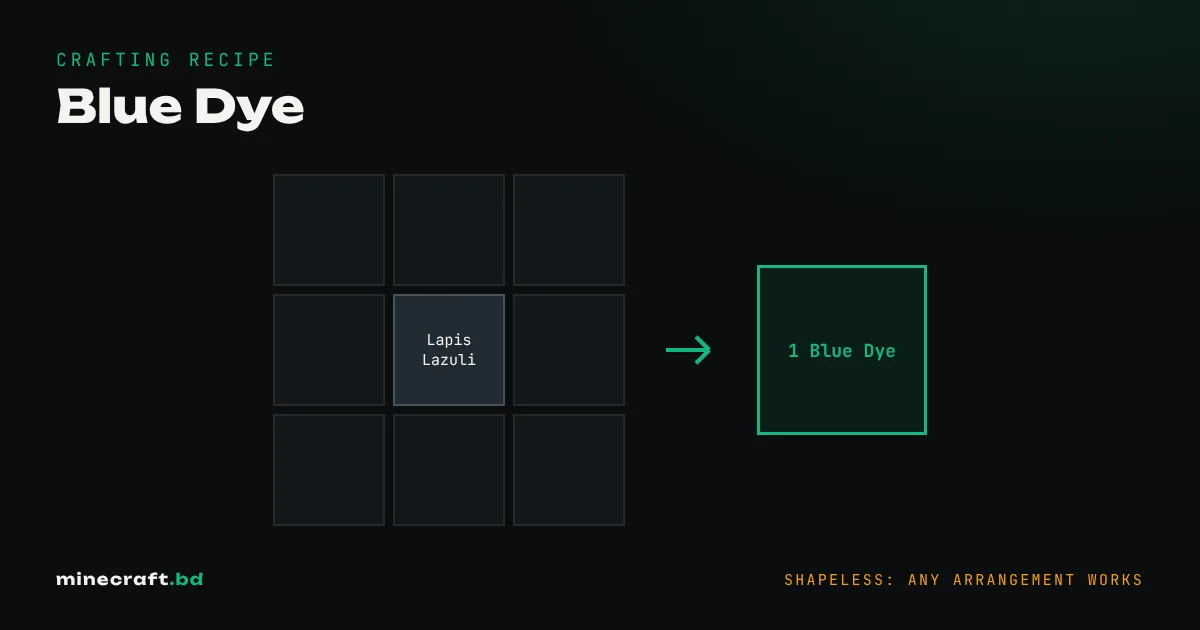
Put 1 lapis lazuli or 1 cornflower in any crafting grid to get 1 blue dye. Both recipes are shapeless, so they work in the 2x2 inventory grid too, and they’re identical in Java and Bedrock.
Which source you use depends on what’s near you. Lapis is the better bulk source once you’re mining; cornflowers are quicker on day one if you spawn in a plains biome.
Lapis lazuli
Lapis ore is common underground and drops 4 to 9 lapis per block with any stone pickaxe or better, more with Fortune. It’s most common around Y 0 and spreads from roughly Y -64 up to Y 64, so you’ll run into it while branch mining for iron or diamonds. Our mining guide covers good levels and layouts.
The catch is that lapis is also enchanting fuel. Every enchant at an enchanting table costs 1 to 3 lapis, so if you’re short, keep the lapis for enchanting and use flowers for dye.
Cornflowers
Cornflowers are the small blue flowers with spiky petals. They generate in:
- plains and sunflower plains
- flower forests
- meadows
One cornflower gives one dye. To farm them, stand on a grass block in one of those biomes and use bone meal on it. The flowers that pop up are picked from that biome’s flower list, so in a plains or flower forest you’ll get cornflowers mixed in with the rest. A few rounds of bone meal and a pair of shears or your hand clears the patch into a stack of dye.
Don’t confuse them with blue orchids, which only grow in swamps and make light blue dye instead.
Other sources
- Wandering trader: sometimes offers 3 blue dye for 1 emerald.
- Trail ruins: common suspicious gravel can give 1 blue dye when brushed.
- Bedrock only: a wandering trader that had the blue dye trade can drop 3 blue dye when killed while you’re holding an emerald. Not something to plan around.
What blue dye is for
Blue dye colors almost anything that takes dye: wool and sheep, beds, carpet, glass, terracotta, candles, shulker boxes, leather armor, banners, and the collar of a tamed wolf or cat. It also colors sign text, and it’s one of the cheapest ways to get blue concrete in bulk.
It mixes into other dyes:
| Mix | Result |
|---|---|
| Blue dye + white dye (or bone meal on Java) | 2 light blue dye |
| Blue dye + green dye | 2 cyan dye |
| Blue dye + red dye | 2 purple dye |
| Blue dye + red dye + pink dye | 3 magenta dye |
Purple and cyan have no flower source of their own (cyan can also come from a pitcher plant), so blue dye is the usual route to both.
Firework stars and banner patterns take blue dye too. If you’re dyeing a lot of wool for a build, dye the sheep instead of the wool blocks: one dye colors the sheep permanently, and every shear after that gives blue wool for free.
Edition differences
The two crafting recipes are the same everywhere. Bedrock is more relaxed about ingredients: lapis lazuli, ink sacs, cocoa beans and bone meal can stand in for their dyes in many recipes, so you can skip the conversion step. On Java you craft the lapis into dye first. Java’s dyed carpet recipe only accepts white carpet, while Bedrock lets you redye carpet of any color.
Common questions
Can you make blue dye without lapis lazuli?
Yes. A cornflower crafts into 1 blue dye. Cornflowers grow in plains, sunflower plains, flower forests and meadows, and bone meal on grass in those biomes makes more.
Does lapis lazuli work as blue dye directly?
On Bedrock, many recipes accept lapis lazuli in place of blue dye. On Java you have to craft it into blue dye first.
How do you make dark blue dye in Minecraft?
There is no dark blue dye. Blue dye is the darkest blue in the game; mixing it with white dye or bone meal gives light blue, and mixing it with green gives cyan.
Sources & verification
Facts on this page are checked against these references and in-game behavior for the stated edition(s). how we verify.
Keep reading